“Jason and I were always battling for the same space in the mix”: The controversial mixing of Metallica’s …And Justice for All wasn’t a hazing of Jason Newsted. This is James Hetfield’s explanation
Given the band’s success and the resources at their disposal, it remains remarkable that Metallica have had not one, but two, albums with enormously controversial mixes.
The more recent of the two was on 2003’s St. Anger, which was a polarizing album even without its famous ‘metal trash can lid’ snare drum sound. The other came 15 years before, on, 1988’s …And Justice for All.
Though Metallica were on a sharp upward trajectory while recording the latter album – indeed, it would mark their debut on MTV and in the upper echelons of the Billboard charts – it was nonetheless an incredibly difficult time for the band.
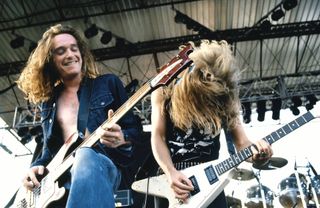
On September 27, 1986, Metallica lost their beloved bassist, Cliff Burton, in a horrific tour bus crash.
Aside from his remarkable abilities on the bass itself, Burton had hugely influenced the band’s musical direction.
“[Cliff] really exposed James [Hetfield] and I to a whole new musical horizon of harmonies and melodies,” recounted Lars Ulrich in a 2008 Guitar World interview. “[Our] whole way of writing songs together was very much shaped around Cliff’s musical input.”
(Image credit: Pete Cronin/Redferns)
After a period of mourning, the band auditioned dozens of new bassists, eventually settling on Jason Newsted. The wound from Burton’s death, however, was still incredibly raw.
Get The Pick Newsletter
All the latest guitar news, interviews, lessons, reviews, deals and more, direct to your inbox!
“There was a lot of anguish after Cliff died, and basically Jason was the punching bag,” guitarist Kirk Hammett told Guitar World. “We vented so much on him, and it wasn’t really fair.”
The band’s first album with Newsted, …And Justice for All was marked by the band’s increasingly progressive and technically intricate bent – and nearly inaudible bass parts.
With the band’s tough-edged, hard-drinking reputation, the bizarre mixing decision was long assumed to be an elaborate way of hazing their newest member.
James Hetfield, however, maintains that this was not the case.
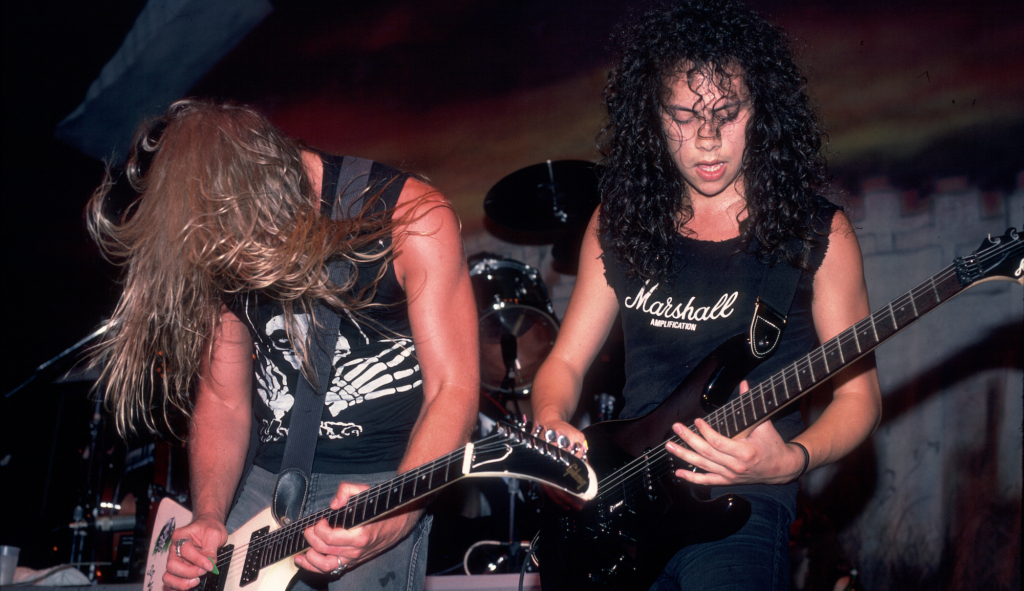
“The bass [on …And Justice for All] was obscured for two reasons,” Hetfield told Guitar World. “First, Jason tended to double my rhythm guitar parts, so it was hard to tell where my guitar started and his bass left off. Also, my tone on Justice was very scooped – all lows and highs, with very little midrange.
“When my rhythm parts were placed in the mix, my guitar sound ate up all the lower frequencies. Jason and I were always battling for the same space in the mix.”
Speaking to Guitar World at the same time, Newsted said simply of the situation, “I can’t explain how much grief I dealt with – and still deal with – over that record.”
From the get-go, it’s been a remarkable year for guitar. There have been light-year leaps in tech, unexpected collaborations, genre boundaries have been shattered, new…
The images have already been burned into some deep, tender part of rock’s collective consciousness: Kurt Cobain, slumped over his Martin acoustic, his tattered librarian…
On December 18, 2022, about two weeks after playing their first-ever show together since 2001, Pantera are getting ready to tear up the Knotfest Carnival stage…
“Jason and I were always battling for the same space in the mix”: The controversial mixing of Metallica’s …And Justice for All wasn’t a hazing of Jason Newsted. This is James Hetfield’s explanation
Report
There was a problem reporting this post.
Block Member?
Please confirm you want to block this member.
You will no longer be able to:
See blocked member's posts
Mention this member in posts
Invite this member to groups
Message this member
Add this member as a connection
Please note:
This action will also remove this member from your connections and send a report to the site admin.
Please allow a few minutes for this process to complete.





Responses