
A 100-Plus-Year-Old Mystery Banjo Travels from Alaska to Nashville

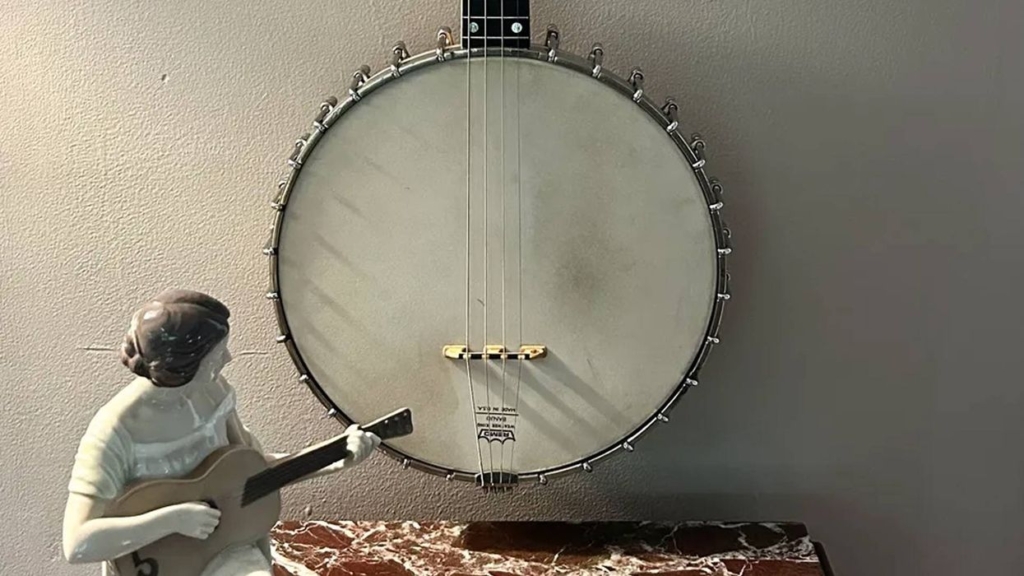
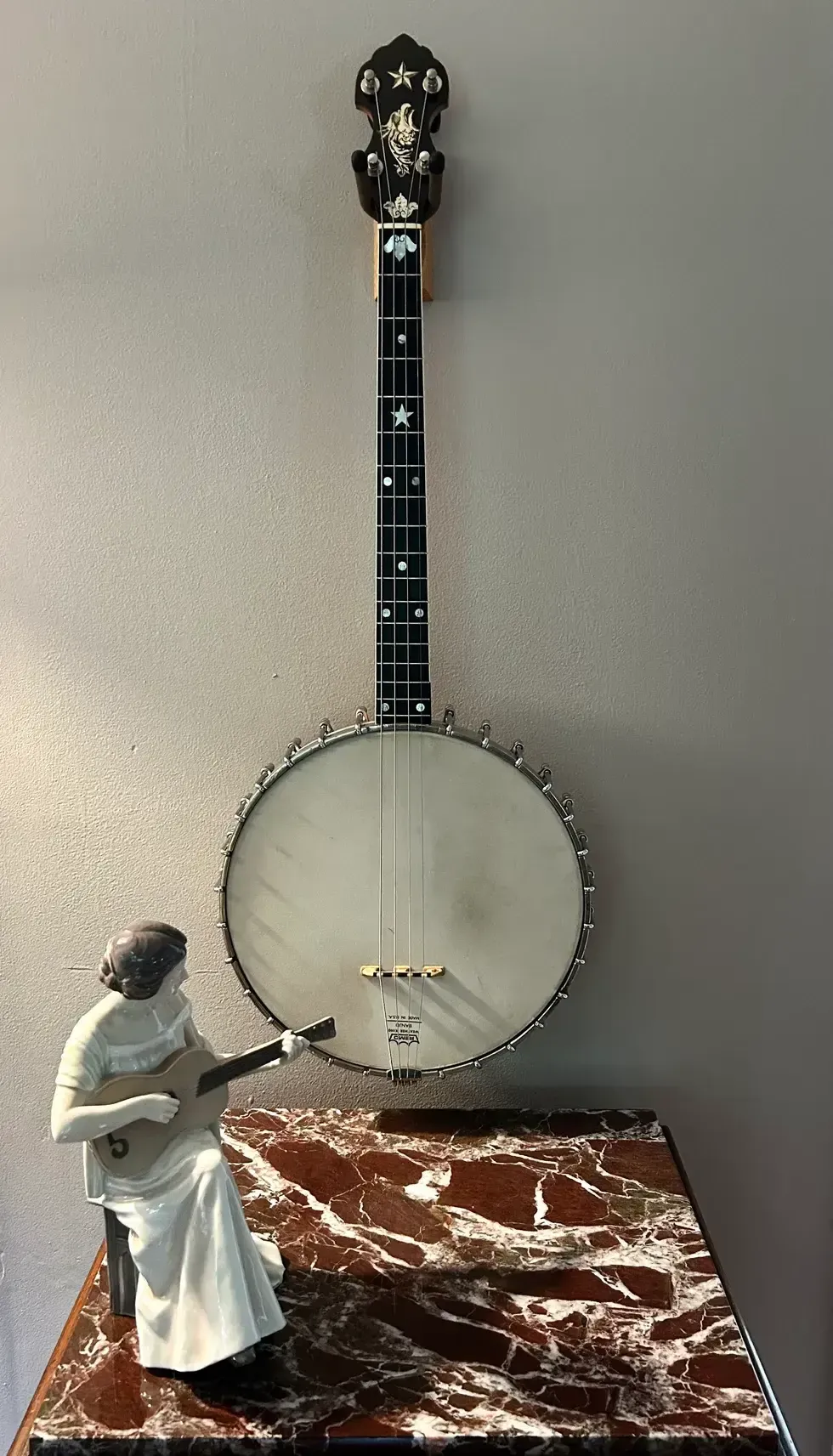
The rabbit holes of vintage banjo identification are myriad. It’s a Vega because of the stamp on the dowel rod, but why does it also say “Fairbanks Banjo made by Vega?” The serial number dates it to 1911, and of the banjo models Vega produced at that time—the Regent, the Imperial Electric, the Whyte Laydie, and the Tubaphone—this one is clearly a Tubaphone. Except Tubaphones never had an elaborate gryphon peghead inlay, so how can it be a Tubaphone? When did Vega switch from a grooved stretcher band to a notched one? And what the heck is a stretcher band, again?
That’s when it’s time to bring in the big guns.
Enter Karl Smakula, friend of Fanny’s and third-generation banjo expert. His grandfather Peter H. Smakula heard Pete Seeger in the 1950s and immediately bought himself a Kay banjo. He began repairing instruments and building banjos, eventually opening his own music store, where his son Bob also worked. Bob went on to open Smakula Fretted Instruments in 1989, where his son Karl also worked. Suffice it to say, if it’s a banjo, Karl and his family probably know about it.
“I would have never said the gryphon inlay was used on a Tubaphone until I saw this one,” says Karl. “My dad, who has seen everything, has never seen this.”
In the early 1900s, Vega was focused on guitars, mandolins, and brass instruments, but they were aware of the growing popularity of the banjo. The A.C. Fairbanks Banjo Company, a widely respected banjo maker, suffered a devastating fire in 1904 and made for a timely acquisition by Vega. (“After which Fairbanks made a hard pivot to bicycle parts,” reveals Karl.)


Responses